Showing posts with label top bar beehive. Show all posts

July 16, 2013

top bar hive inspection - day 10

2013.07_bee inspection day 10_1
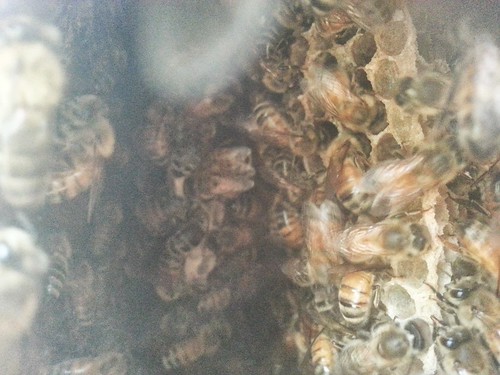
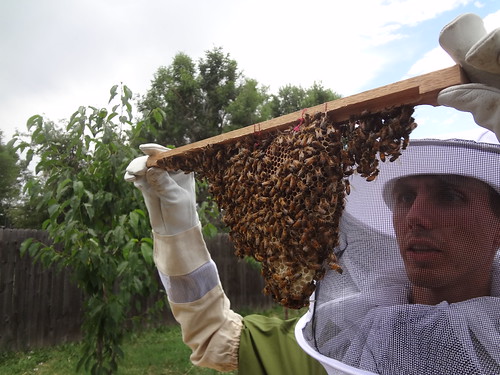
The bees had started building comb on four top bars after 10 days. We haven't been able to glimpse the queen yet, and we couldn't spot any eggs or larvae, so we'll have to keep an eye on it in case the queen is dead.

I had to trim a little off one of the combs that was a little crooked. The honey that stuck to the knife is some of the best tasting I've ever had!
http://di-wineanddine.blogspot.com/http://di-wineanddine.blogspot.com/

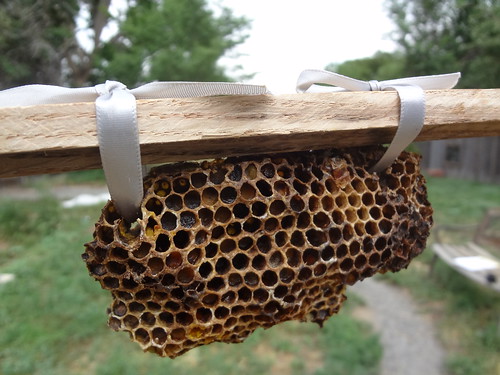
We finally removed the old comb that was sitting on the bottom mesh screen. We had originally put it there to attract the bees to prevent absconding. We decided to tie it up to a bar let them build off it. Probably not necessary, but it looked in maybe, just maybe there was some larvae in it. Ribbon works well since it is broad and won't cut through the comb like thread might.
2013.07_bees inspection day 10_adding comb1

With all the hot weather we've been having (highs in the 90s), the bees have been bearding so I added some roof insulation. I used a 1" thick piece of salvaged polyisocyanurate (yellow, foil-faced). The facing had come off one side, so I wrapped it in sheets of aluminum foil in order to keep foam particles from falling off into the hive. The foil also helps since it acts as a radiant barrier. We drilled some gable vents to ventilate the space above the insulation and below the metal roof, to try to reduce the solar gain. We can plug the vents during the winter.
2013.07_bees inspection day 10_roof insulation

July 7, 2013

we got bees!

2013.07_we got bees
After giving up all hope of getting honeybees this season, we were able to get a colony from Five Fridges Farm. This colony had been removed from a (human) structure by a humane bee removal company. Because they had already been established and were forcibly removed, as opposed to a captured swarm, they are stressed and it is less likely that they will survive or stick around in our hive. We tried to make our hive as appealing as possible by sewing some old comb to one of the top bars and putting some lemongrass essential oil (mimics the queen pheromone) on the inside.

Doing the swarm pour:


Inspecting the hive the next morning:


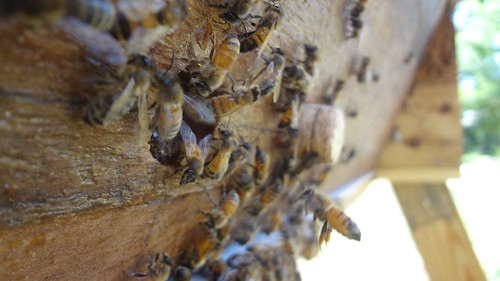
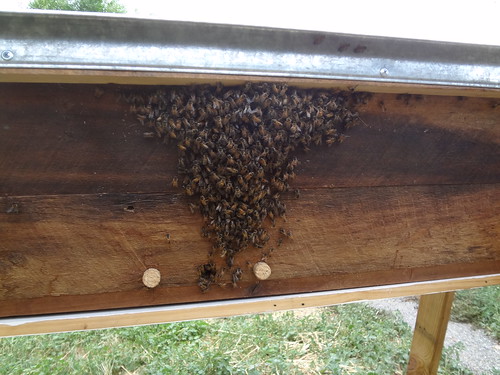
For the first few days, there was a lot of activity outside the hive, with maybe 1/3 to 1/2 of the colony clustering on the outside of the hive:
bees bearding on outside of hive

I was worried that this was a sign they were getting ready to swarm–possibly leaving with a second queen. After four days, the cluster on the outside was gone, and I was able to see some fresh comb through the observation window–a good sign that the bees have decided to stay!
new comb

June 22, 2013

top bar beehive

2013.06_top bar bee hive (1)
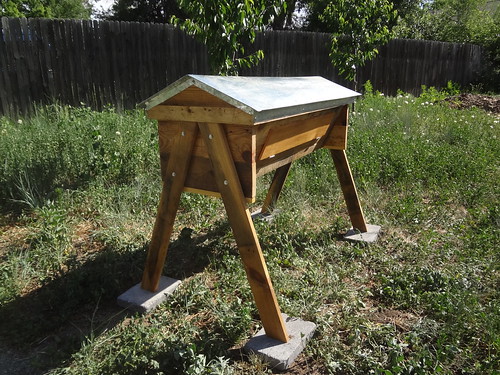
We finished the top bar beehive!!  But it doesn't look like we will have any inhabitants this year... We were on a few lists for getting swarming bees but an unusually low number of bees actually swarmed this year.  It could be a sign of the general health issues that bees have been facing lately including colony collapse disorder or it could be because all our late spring snow reduced early nectar supplies.

While we've been waiting for our swarm lists to pan out, Eric has been attempting to lure a swarm to our hive with a cotton ball of lemongrass essential oil because that supposedly mimics a queen bees pheromones.  He sweetened the offering with sugar water and a few chunks of bees wax.  No takers though.  Now that we are past summer solstice, it is unlikely that bees will swarm and even if they do they will not have much time to build up a new hive for winter.

May 8, 2013

finishing the top bar beehive

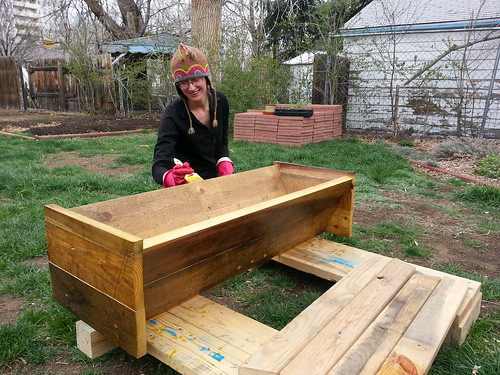
Our friend Greg made us a top bar beehive out of salvaged wood. We just have to put on the finishing touches: make a roof, attach the legs, and seal the wood to make it more weather resistant:
 
2013.05_sealing the top bar beehive

Build your own top bar hive with these instructions, a supplement to The Barefoot Beekeeper.

The instructions recommended sealing it with a 20:1 mix of raw linseed oil and beeswax. Make sure to get "raw linseed oil" instead of "boiled linseed oil" which contains heavy-metal solvents.

 
The "pure raw linseed oil" that we found at the hardware store said that it contains no additives, yet it still has the "causes cancer/birth defects in California" warning—really confusing! Next time I might opt to get food-grade flaxseed oil, which I believe is essentially the same thing.

Hopefully we can get this thing done in time to get bees when they start swarming!