Showing posts with label miso. Show all posts

March 13, 2013

tofu misozuke pt. 2

2013.03_tofu misozuke 2
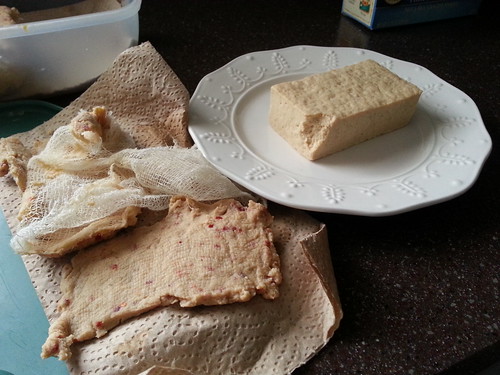
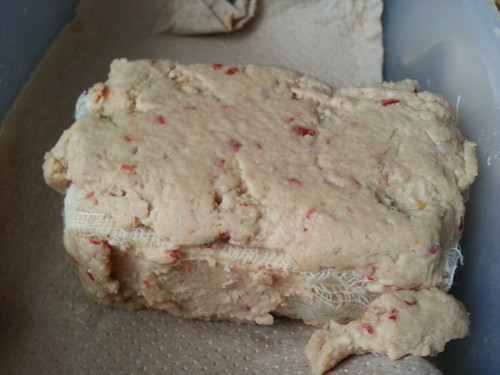
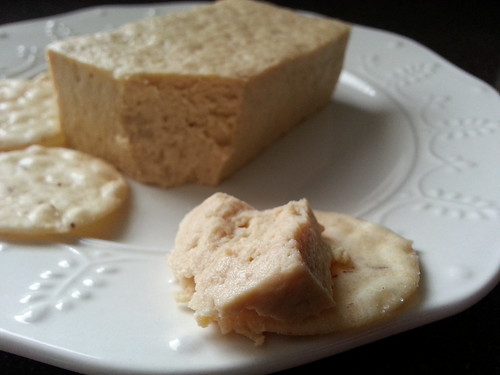
Six months ago we made tofu misozuke (miso-cured tofu), a magical transformation of tofu into a crumbly cheese-like spread. This time we tried adding red pepper flakes to the miso paste, which added a subtle spiciness to the final product. We also improved the process by being diligent about changing paper towels every day and checking on it often (since we got some mold last time). It was done in about two weeks.

Still wrapped in cheesecloth and miso/sugar/sake paste:
2013.03_tofu misozuke 3

Unveiled:
2013.03_tofu misozuke 1

August 18, 2012

tofu misozuke

2012.08_tofu misozuke
I encountered tofu misozuke (miso-cured tofu) at a farmers' market stand in California and was kind of blown away. It is tofu that has been transformed into a creamy cheesy spread simply by coating it with a mixture of miso, sugar, and sake. I knew I had to try making it. Here is the recipe from Rau Om (you can try/buy Rau Om's tofu-misozuke at several markets in the bay area and Oklahoma, or buy it from their online store).

Our first attempt at making tofu misozuke was semi-successful.We changed the moisture-absorbing paper towels every 1–2 weeks. After only 4 or 5 weeks (as opposed to the 2 months recommended by Rau Om), the tofu was cured all the way through. Maybe it went quickly because of the fridge temperature or altitude... Unfortunately, there were some mold spots growing on the outside of the cheesecloth/marinade, and one of our two blocks had to be composted because it was too moldy. The other one was delicious though. For our next attempt, we will check the paper towels more often and check the doneness after 3 or 4 weeks. And maybe we will try some variations that include red pepper flakes, nori, or tea.

December 18, 2009

miso mayo

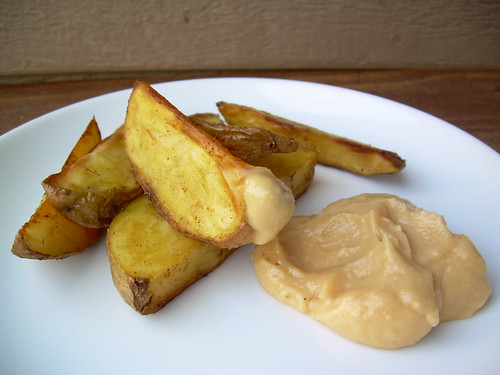
We are big fans of Miso Mayo, a vegan mayonnaise alternative which, in my opinion, tastes a lot better than nayonaise or vegenaise or even real mayonnaise. It doesn't really taste like mayonnaise at all, but it is great for dipping steak fries and on sandwiches. And miso is like, really good for you, or something. But, it is a little pricey, so I wanted to try reverse-engineering the recipe so I could make it from scratch. It turned out to be really easy and tastes pretty true to the store-bought version.

Ingredients:
8 T. canola oil
5 T. white/yellow miso
2 T. apple cider vinegar
1 t. onion powder
1 t. soy sauce

Mix all ingredients and it's done!

June 22, 2009

komatsuna mushroom noodle soup

We've had a string of rainy days in Boulder that made us want some soup. I made this using komatsuna and mushrooms from the farmers market.

Ingredients:
1 T. canola oil
2 small spring shallots (or onion)
6 garlic cloves, minced
4 T. ginger, minced (frozen or fresh)
6 c. water
3-4 t. bouillon/reduced stock
1 c. small dried mushrooms
2 T. mirin
2 T. rice vinegar
2 T. soy sauce
1 lb. Komatsuna
8 oz. rice noodles (fettucine width)
1/4 c. almonds, ground
4 T. miso paste
1 T. sesame oil

In a large soup pot, saute shallots in canola oil for a minute or two. Add the garlic and ginger. When they start to stick to the bottom, add water and stock. Add mushrooms, mirin, rice vinegar, and soy sauce. Chop and add the komatsuna stems, then chop the komatsuna leaves and add. This will give the stems a little bit more time to cook. Wait until the komatsuna looks fully cooked, then add the rice noodles and cook until they are soft. Then, remove from heat and add the ground almonds, miso paste, and sesame oil. The ground almonds add some creaminess to the soup. Dissolving the miso paste can be difficult. It may help to remove a cup or two of the soup liquid to mix with the miso. The sesame oil gives the soup nice sparkling orange oil bubbles floating on top. Top notch!

Side Note:
I used homemade vegetable stock. I saved up onion, garlic, green onion, and maybe a few radish scraps in the freezer. When it came time to make the stock, I fried the scraps in some oil until browned and then added some water. I cooked it down and added a few dashes of soy sauce. The reduced stock doesn't freeze solid, so cubes won't work. I froze it in a small tub so I could scoop out a tablespoon whenever I needed it. And I ended up using it all in this soup! The strength of the stock depends on what you put in it and how much you boil the water down. I estimated this was equivalent to 3-4 boullion cubes or teaspoons of boullion paste. You could use a dashi stock for a more authentically Japanese soup.